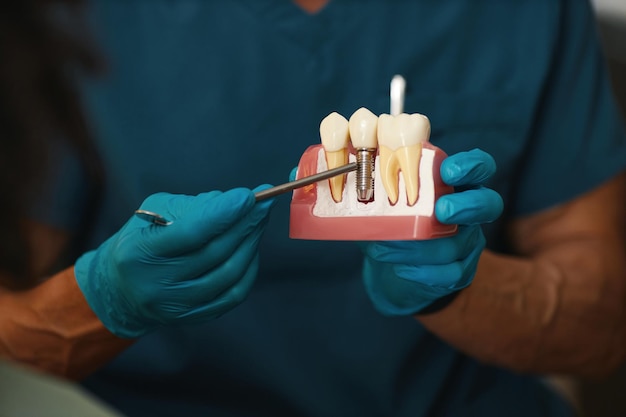
When a tooth is lost, the jawbone in that area no longer receives the same pressure from chewing. Over time, this can cause the bone to become thinner or smaller. A periodontist in Dacula can assess the gums, jawbone, and overall oral health to determine what treatment may be appropriate after tooth loss. Dental implants can help replace missing tooth roots and provide support for a replacement tooth. Unlike a removable tooth replacement that rests mainly on the gums, an implant is placed in the jawbone.
Understanding how this works can help explain why implants may play a role in maintaining the jawbone after tooth loss.
Why Does Jawbone Loss Happen After Tooth Loss?
The jawbone needs regular stimulation to maintain its structure. Natural tooth roots provide some of this stimulation when chewing.
When a tooth is removed or lost, that area no longer receives the same pressure. The bone may gradually be remodelled and become less dense or smaller. The amount of change can vary depending on the location of the missing tooth, overall health, and other factors.
How Do Dental Implants Support the Jawbone?
Dental implants in the jaw are placed into the jawbone to replace the role of a missing tooth root. Once the implant heals and becomes stable, it can provide a firm foundation for a replacement tooth.
The implant can transfer some chewing forces to the surrounding bone. This stimulation may help maintain bone in the area compared with leaving the space without an implant.
Can Implants Restore Bone That Has Already Been Lost?
Dental implants do not automatically rebuild bone that has already been lost. When there is not enough bone to support an implant, additional treatment may sometimes be considered before or during implant placement.
A periodontist near you can evaluate the amount and condition of the available bone and determine whether an implant can be placed safely. In some cases, bone grafting or another treatment may be recommended.
What Happens to the Jawbone During Implant Treatment?
Dental implant treatment generally involves several stages. The exact process depends on the condition of the mouth and the treatment plan.
Common steps may include:
- Examining the teeth, gums, and jawbone
- Taking dental images to assess the implant site
- Treating existing oral health problems when needed
- Placing the implant into the jawbone
- Allowing time for the area to heal
- Attaching a replacement tooth after the implant is ready
Healing time can vary from one person to another.
Can Dental Implants Help Maintain Facial Structure?
Jawbone loss can affect the shape and support of the areas around the mouth. When several teeth are missing, changes in the jawbone may become more noticeable over time.
Dental implants near you can help replace missing teeth and their roots. They may also help support the shape of your mouth and face. However, the effect on your appearance depends on how many teeth are missing, how much bone has been lost, and your overall treatment plan.
Who May Need an Assessment Before Getting Implants?
Not every missing tooth can be treated with an implant immediately. The gums and jawbone need to be assessed before treatment.
An evaluation may be especially important when there is:
- Significant bone loss
- Gum disease
- An untreated dental infection
- Poor oral hygiene
- Several missing teeth
- A history of problems with previous dental treatment
Treating active oral health problems first may improve the conditions needed for implant treatment.
How Can Dental Implants Support Long-Term Oral Health?
Dental implants in Dacula can provide a strong base for replacement teeth when they are right for your needs. Keeping the area around the implant clean is important because the gums and bone around an implant can still have problems.
Good care includes:
- Brush your teeth twice a day.
- Clean between your teeth and around the implant.
- Follow your dentist’s care instructions.
- Visit your dentist for regular check-ups.
- Avoid habits that could damage the replacement tooth.
Dental implants do not protect the gums and nearby tissues from gum problems.
Why Is a Periodontal Assessment Important?
A periodontist in Dacula can examine the gums and supporting bone before implant treatment. This is important because healthy gum tissue and adequate bone support are part of successful implant planning.
A detailed assessment can help identify bone loss, gum disease, infection, or other concerns that may affect treatment. It can also help determine whether additional treatment is needed before an implant is placed.
Protect Your Jawbone After Tooth Loss!
Replacing a missing tooth can involve more than restoring the visible part of the smile. Dental implants can replace the role of a missing tooth root and may help maintain bone around the implant site. An individual assessment can determine whether implants are suitable and whether additional treatment is needed.
Book an appointment with Quintero Periodontics to discuss your missing tooth, jawbone health, and dental implant treatment options.
FAQs
Does every missing tooth cause jawbone loss?
Bone changes can occur after a tooth is lost because the area no longer receives stimulation from the natural tooth root. The amount of change varies between individuals and locations in the mouth.
Can a dental implant stop all future bone loss?
No. An implant may help keep the bone around it, but it cannot stop all bone loss. Gum disease, poor oral care, and other health problems can still affect the bone and gums around the implant.
Is bone grafting always needed before an implant?
No. Bone grafting is not required in every case. It may be considered when there is not enough healthy bone to provide suitable support for an implant.
Can implants be placed years after losing a tooth?
In some cases, implants can be placed years after tooth loss. However, bone changes may have occurred during that time. An assessment can determine whether enough bone is available or whether additional treatment is needed.